Individual Placement and Support (IPS)
Individual Placement and Support (IPS) is an evidence-based approach to Supported Employment that helps people find and maintain regular, paid employment in the open labour market. Originally developed for individuals with severe mental disorders, IPS is now also used with other groups who face barriers to employment.
The model is based on the principle that anyone who wants to work should have the opportunity to do so, regardless of diagnosis or previous work experience. Rather than requiring extensive preparation before entering employment, IPS focuses on finding suitable jobs based on each person’s interests, preferences and abilities.
A key feature of IPS is the close integration of employment support with relevant treatment or follow-up services. Employment specialists provide individualised support throughout the job search and after employment begins, with the aim of achieving sustainable employment.
Background
Individual Placement and Support (IPS) was developed by Deborah R. Becker and Robert E. Drake in the USA, building on the principles of Supported Employment. Originally designed for people with severe mental disorders, the model has since gained international recognition and is now implemented in many countries.
IPS has a strong scientific foundation. According to the IPS Employment Center, the model has been evaluated in randomised controlled trials (RCTs) that consistently demonstrate better employment outcomes for people with severe mental disorders compared with traditional services. Research has also shown positive results for other target groups, including young adults with early psychosis, veterans with PTSD, and people experiencing homelessness or involvement with the justice system. Evidence is also growing for people with substance use disorders, anxiety, depression and certain physical health conditions. Across these target groups, our research archive contains 66 publications from RCTs (some trials are reported in more than one article).
As IPS has expanded to new target groups, its integration with services has evolved beyond traditional mental health care. IPS is now used alongside substance use treatment, primary care, rehabilitation, pain management, housing services and educational support. The fundamental principle remains unchanged: employment support should be closely integrated with the services responsible for the individual’s treatment or follow-up.

Supported Employment
Supported Employment is a systematic approach to helping individuals with significant disabilities obtain regular, paid employment in the open labour market.
Supported Employment was developed in the USA in the 1970s as part of services in both Vocational Rehabilitation (VR) and the emergence of Long Term Services and Supports (LTSS) for individuals with significant disabilities.
Supported Employment was developed within community-based, non-profit organisations as an attempt to provide services to individuals with significant disabilities during the deinstitutionalisation in the USA.
Supported Employment is based on the principles of community integration. Additionally, other critical aspects such as paid employment, vocational preferences, job development, transition from school to work, and parental involvement in the process have been central. A key figure in the development of Supported Employment over the past three decades has been Dr. Paul Wehman.
Evidence-Based Practice
Evidence-Based Practice (EBP) is an interdisciplinary approach to clinical practice that has seen significant growth since its formal introduction in 1992. It began in medicine as evidence-based medicine (EBM) and spread to other fields such as dentistry, nursing, psychology, education, library and information science, and other areas. Its fundamental principles are that all practical decisions should:
1) be based on research, and
2) that this selection and interpretation of research is conducted according to specific characteristics of EBP.
Typically, such norms disregard theoretical and qualitative studies and assess quantitative studies according to a narrow set of criteria for what counts as evidence. If such a narrow set of methodological criteria is not used, it would be more accurate to refer to research-based practice.
There are various definitions of the criteria that should underpin evidence-based practice. Common to all is that they emphasise empirical evidence from methodologically rigorous studies. Bond, Drake & Becker (2010) have drawn on Leff (2005), Mueser & Drake (2005), Bond & Campbell (2008), Schutz, Rivers & Ratusnik (2009), and Baker, McFall & Shoham (2009) in proposing their formulation of a set of 9 criteria:
1be well-defined
The model is described precisely enough to be followed and studied: staffing, structure, how the service works and which interventions it uses. A manual sets out the components, and a validated fidelity scale shows whether a service follows the model. IPS has had clear principles and definitions from the start.
2reflect the client’s goals
Services should match what the people receiving them want. Many people with serious mental illness do not use services, often because what is offered does not suit them. A practice should build on each person’s goals and preferences, through shared decision-making. For most, work has been shown to be a central goal.
3align with societal goals
A practice is worth more when it also benefits society – employers, families and the public. Society’s goals are expressed in laws, policies and norms, such as everyone deserving a chance to work, which IPS supports. When policy and practice clash, the problem often lies in the policy.
4be effective
Effectiveness is shown by rigorous studies with credible control groups, replicated by different research groups in ordinary services, with low dropout, large effects and consistent results across studies. IPS has a large body of such research.
5produce lasting results
The effect of many interventions fades over time, especially once they end. The most valuable ones lead to stable, lasting change and, in line with recovery, make people less dependent on services over time. Support without a time limit is one way to sustain results.
6have minimal side effects
Like medicines, psychosocial programmes can have unwanted effects. Day programmes, for example, can separate people from society and signal that they cannot manage without professionals. The side effects must not outweigh the benefits – a standard IPS clearly meets.
7be cost-effective
Services must weigh the financial risk of taking up a new practice, and for health policy, cost-effectiveness and savings are essential. The economic impact of IPS has been examined in its own body of research.
8fit different settings and groups
A practice should work in different communities and be acceptable to many groups. Many practices have been studied narrowly – in cities, mainly with white clients or in a single country – and are used elsewhere without regard to culture. It is well researched how well IPS works with people in multiple countries, across different cultures and diverse contexts.
9be relatively easy to implement
A useful practice must be relatively easy to implement and possible to roll out widely. If it is too clinically complex, it is hard to spread where most staff lack advanced clinical training. Acceptance among practitioners and high staff turnover also matter.
Severe Mental Disorders
The term mental disorders is used when specific diagnostic criteria are met, as opposed to mental health issues.
Mental disorders range from simple phobias and mild anxiety and depressive disorders to extensive and severe conditions such as schizophrenia.
Common to all mental disorders is that they affect thoughts, emotions, behaviour, demeanour, and interactions with others. Mental disorders are identified by experienced clinicians and/or through a structured clinical interview, where attempts are made to determine as accurately as possible whether the various diagnostic criteria are met.
The distinction between mild mental disorders and severe mental disorders is not well-established in detail. Simple phobias, other limited anxiety disorders, mild to moderate depression, mild eating disorders, mild substance use disorders, etc., are typically defined as mild mental disorders. Nevertheless, it is difficult to find a common definition of severe mental disorders.
In the USA, there is a longer tradition of defining severe mental disorders. In the early 1980s, this target group was defined as individuals with a "chronic mental illness." This definition focused on diagnosis, functioning, and duration of the illness. The duration of the illness had to be at least two years to meet the criteria for the target group.
In 1991, the definition was slightly modified; less emphasis on diagnosis and more on functional impairment. As a result, the definition was expanded to include more individuals, and the title was changed to "severe and persistent mental disorders."
In 1995, the definition was changed again. The title was altered to "severe mental disorders." There were minor changes to the diagnostic criteria, but less emphasis was placed on the duration of the illness, and the functional criteria were revised. Additionally, a functional assessment tool was developed to make the identification of the target group more objective.
- Early 1980s“chronic mental illness”
- 1991“severe and persistent mental disorders”
- 1995“severe mental disorders”
In the book "Individual Placement and Support: an evidence-based approach to Supported Employment" (Drake, R.E., Bond, G.R. & Becker, D.R.), "severe mental disorders" refers to individuals who have experienced mental health challenges over extended periods in their lives, have significant challenges in important life roles such as self-care, work, and close relationships. Individuals with severe mental disorders often have psychotic disorders such as schizophrenia, or severe mood disorders such as bipolar disorder or major depression. However, the target group in IPS is not limited to these diagnoses alone.
8 Principles
There are eight principles that underpin the services offered in IPS:

1. Everyone who wants to work is eligible for IPS (no one is excluded)
Research shows that staff cannot predict who will succeed in IPS. Clients who want to work succeed despite substance use, ongoing symptoms, homelessness or other challenges. IPS programmes therefore accept everyone who wants to work, regardless of criminal record, symptoms, treatment choices or missed appointments. Rather than trying to change clients first, employment specialists help them find jobs where their challenges matter least.

2. The goal is ordinary work
Employment specialists help clients find ordinary, paid jobs in the community – jobs open to anyone, not set aside for people with particular challenges. Clients earn the same wage as colleagues doing the same job, usually the minimum wage or more. Most people say they want ordinary work, and it makes them feel part of the community. Wage subsidies and work placements do not count as ordinary work.
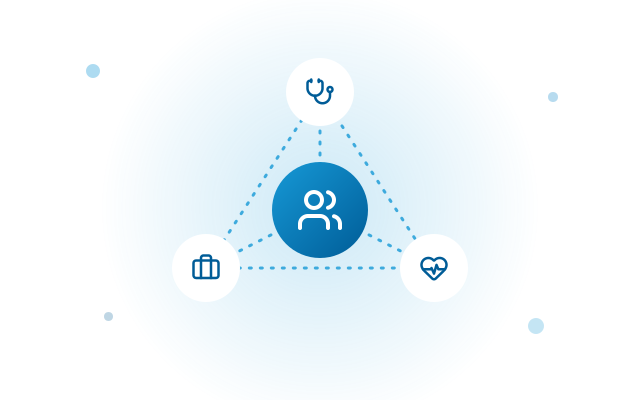
3. IPS services are integrated with relevant partners
IPS has traditionally been part of mental health services: each employment specialist joins one or two treatment teams, attends their weekly meetings and receives referrals from them. As IPS has reached new target groups, the partner can be another team, such as a housing team or rehabilitation services after spinal cord injury. According to the IPS Fidelity Manual, the service team for that population then takes the place of the mental health treatment team.

4. Personalised benefits counselling is provided
Everyone in IPS is offered help to understand how benefits such as disability benefits, housing support and social assistance are affected by earnings – before they start working and whenever they make decisions that affect their income. Benefits counselling requires thorough training and up-to-date knowledge. Good counselling also shows clients how they can work more and earn more.

5. Job search begins shortly after a client expresses interest in working
IPS has no requirement for pre-employment activities such as vocational assessments, job clubs or trial work. Research shows that people are more likely to work when they get help looking for a job straight away. The first weeks are used to get to know the client and build a career profile, and within 30 days the employment specialist or the client contacts an employer.

6. Employment specialists build relationships with employers based on clients' preferences
Through job development, employment specialists get to know employers and their needs. They meet them in person several times, learn about their business and hiring preferences, and return with a job seeker who may be a good fit. Which employers they visit depends on the clients’ interests. If a client does not want to disclose their challenges, the specialist respects this and does not present them to employers.

7. Individualised job support has no time limit
Job support is tailored to each client’s preferences, work history, challenges and strengths, so the type and amount varies. Some meet the employment specialist twice a month, others need more. After about a year of steady work, most clients can continue with support from their treatment team alone, which frees up time for new clients – but if a client needs and wants support for longer, IPS continues to offer it.

8. The client’s preferences are respected
This is the most important principle. Employment specialists do not tell clients where to work, but ask about their preferences – type of work, working hours, workplace, follow-up and whether to disclose their challenges to employers. Clients also decide whether family members should be involved. Culture shapes how we think about work, so employment specialists ask each client what culture means to them.
Quality in IPS
A fidelity scale is a tool for measuring the implementation of evidence-based practice. The fidelity scale in IPS defines the essential components of IPS and can thus distinguish between programmes that have fully implemented the model and those that have not. Research shows that high-fidelity programmes are more effective than low-fidelity programmes. The IPS fidelity scale can be used as a tool to improve services and achieve better employment outcomes.
There is now also a separate fidelity scale for young adults, the IPS-Y. It builds on the standard scale, but adds a section on supported education and an item on family involvement.
Qualified fidelity reviewers typically spend two days at an organisation to conduct a fidelity review.* There, they gather as much information as possible about how services are delivered. Reviewers interview employment specialists, mental health service staff, IPS supervisors, mental health service team leaders, the organisation’s management, clients in the IPS programme, and family members of clients who have received IPS services. They also observe team meetings and employment specialists visiting employers (job development). They review data for the IPS programme (including lists of clients and new jobs) and a sample of client records. This information forms the basis for a report describing what the organisation does well and includes suggestions for how fidelity to IPS can be improved. Reviewers discuss the report with representatives of the organisation and offer to help develop an improvement plan.
* IPSPERA also conducts experimental fidelity reviews in which most of the work is done digitally and only one reviewer is needed. They are nevertheless designed to make reviews better and more efficient, with higher quality. Read more about our reviews under Services.
The first fidelity review is usually conducted after the programme has been operational for four to six months, and clients have obtained jobs and received employment support. Reviewers return every six months until the organisation achieves a score of 100 or more (good fidelity). There can be many reasons for changes in fidelity, such as staff turnover, budget changes in the organisation, or new guidelines from the authorities. Therefore, fidelity reviews are also conducted for programmes with good fidelity, but less frequently: annually instead of every six months.
- 1After 4–6 months
First fidelity review - 2Every six months
Until the score is 100 or more - 3Then annually
Follow-up reviews
Even if qualified reviewers are not available, organisations can still benefit from using the fidelity scale. Staff responsible for quality assurance sometimes act as fidelity reviewers, as they do not have too close a connection to the programme. Although it can be challenging to evaluate a programme within one’s own organisation, internal reviewers follow the scale closely and use the fidelity manual. Additionally, IPS supervisors can benefit from reading the scale and the fidelity manual.
It is recommended that organisations establish steering groups to help implement and maintain the IPS programme based on the results of the fidelity reviews. The steering group should be broadly composed and include managers, IPS supervisors, clients, and family members. The steering group should also have representatives from all partners in the IPS programme. The steering group helps monitor fidelity over time and develop plans to improve fidelity on specific items of the scale.